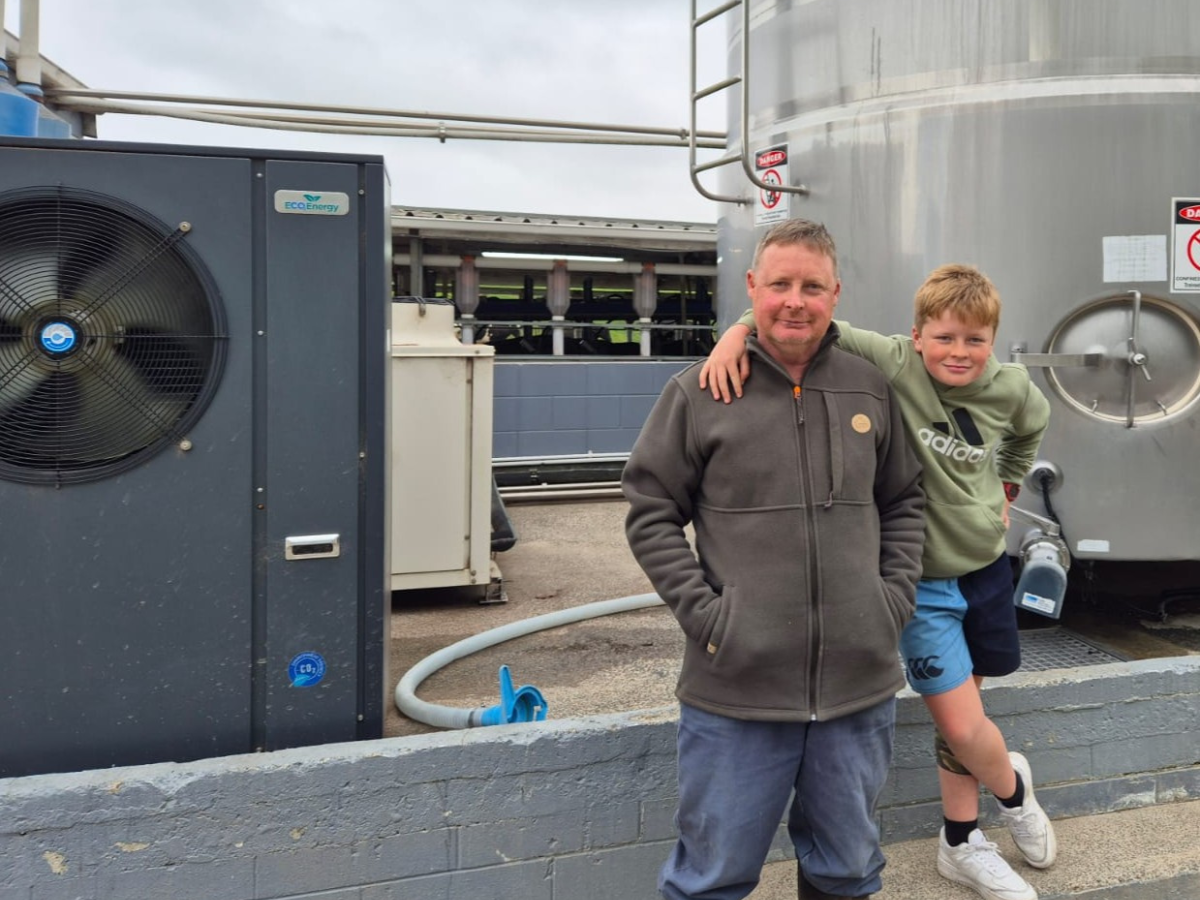
NZ-first CO₂ water heating technology cuts dairy farm energy costs by up to 85%

A Taupō company is the first to bring CO₂-powered water heating technology to New Zealand dairy sheds, helping farmers cut energy costs by up to 85%.
“We saw a real opportunity to help dairy farmers manage rising power costs while protecting milk quality and meeting sustainability goals,” says Nick Papa, co-founder of Eco2Energy.
“Our system uses a natural CO₂ refrigerant to produce hot water up to 90°C, while significantly cutting energy use. It’s proven technology overseas, and we’ve adapted it to suit the needs of Kiwi dairy farms.”
CO₂ water heating is already widely used in Europe and Japan for food processing and commercial applications, but Eco2Energy is the first to introduce it to New Zealand’s dairy sector.
Originally from Argentina, Nick and his wife Ronnie Isgleas are both engineers with backgrounds in refrigeration and food technology. After more than a decade working in New Zealand’s dairy industry, they founded Eco2Energy to give farmers a reliable system that works for their farm, saves them money, and sets them up for the future.
“Most farms can expect a payback time of around 2.5 years, depending on their current energy use and system setup,” says Nick. “The Government’s new Investment Boost tax incentive could also help farmers invest in technology like this.”
How it works
Unlike traditional electric systems, Eco2Energy’s CO₂ technology gets more heat from less power, delivering up to 3.9kW of heat using just 1kW of electricity.
It runs on natural CO₂ refrigerant, which is not only clean and efficient but also better for the environment.
The system works in a closed loop, where the CO₂ refrigerant recycles energy as it goes. This means no waste, no emissions, and consistently strong performance.
Hot water matters during calving
With calving underway and new season milk flowing, hot water might not be front of mind, but it plays a big role in milk quality and compliance.
“It’s one of those things that doesn’t always get attention until there’s an issue,” says Mike Donovan, Head of Business Development. “But when it comes to cleaning and hygiene, consistent hot water is essential.”
Mike spent 26 years dairy farming and 18 years with Ecolab helping farmers improve milk quality through better hygiene systems. He knows just how critical reliable hot water is to maintaining milk quality.
“If your plant or silo wash doesn’t reach the right temperature, you risk leaving behind residues or bacteria that can compromise the next milking. That can lead to costly milk quality downgrades.”
On many farms, a single system is doing all the work. If most of the hot water is used for the silo wash, there might not be enough time to reheat for the plant wash, especially early in the season when refrigeration units aren’t running long enough to generate recoverable heat.
“Every farm setup is different, but they all need reliable, consistent hot water,” says Mike. “Getting it right helps protect milk quality, keeps things running smoothly, and takes one more pressure off during a busy time like calving.”
There was strong interest in Eco2Energy’s system at this year’s Mystery Creek Fieldays. Many farmers were surprised by how much of their power bill goes into heating water and many hadn’t come across CO₂ technology before.
Eco2Energy’s technology is now being used on farms across the South Waikato and Central Plateau, with promising results. Farmers are getting consistent 85–90°C hot water when they need it, even during peak times like morning milking. Early feedback shows improved wash performance and noticeable energy savings compared to traditional setups.